Choosing metal materials for hardware tools is not as simple as asking for “strong steel” or “high hardness.”
In real sourcing work, a tool can fail in different ways. A wrench jaw can spread. A screwdriver bit can twist. A chisel edge can chip. A socket can crack under impact. A garden tool can bend before it ever reaches the customer. These failures usually start with the same mistake: the material, heat treatment, and use case were not matched correctly.
The important trade-off is this:
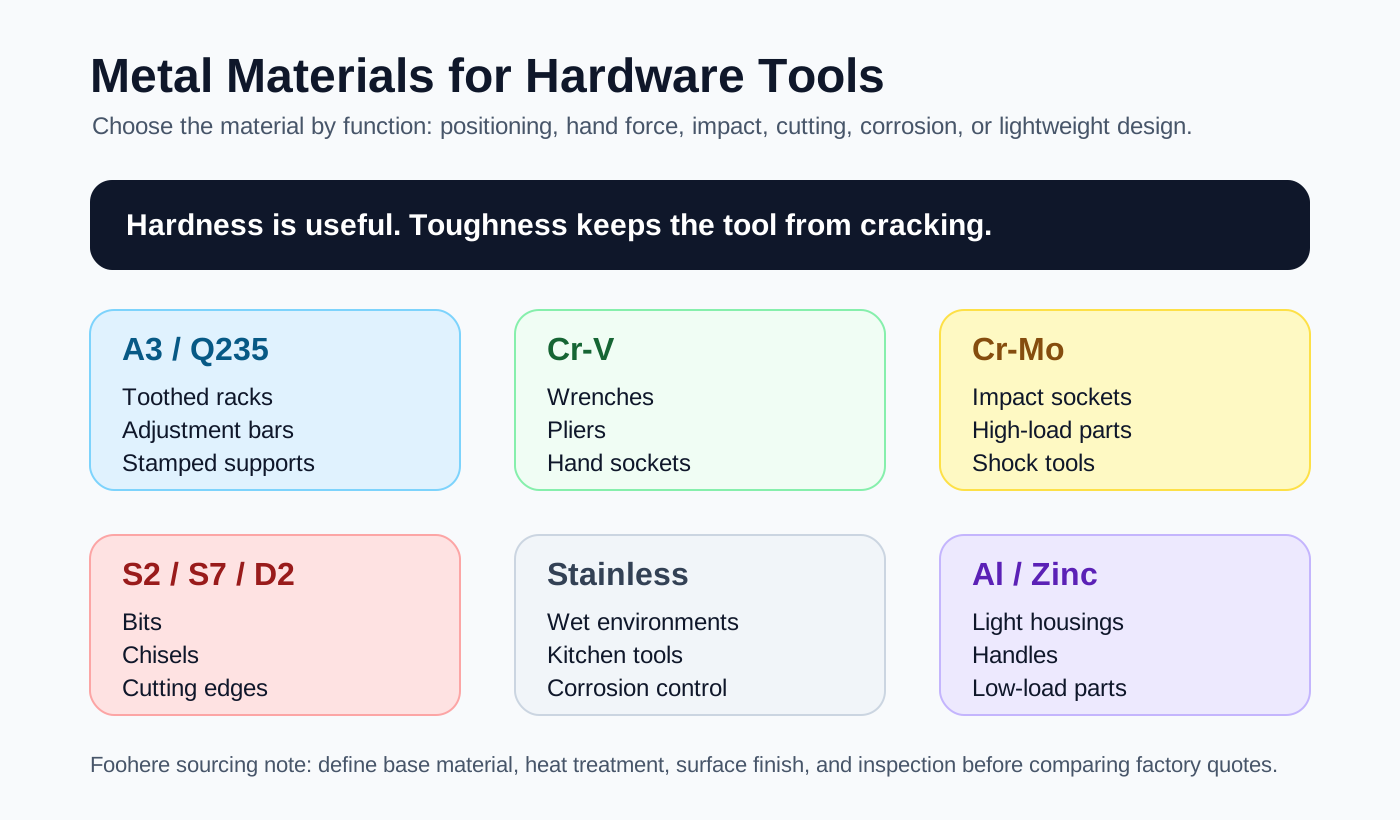
Higher hardness usually improves wear resistance and edge retention, but it can reduce toughness. Lower hardness is usually more forgiving and impact-resistant, but it may deform faster.
That is why a cutting blade, an impact socket, a wrench, and a decorative hardware part should not use the same metal just because they are all “tools.”
This guide compares common metal materials used in hardware tools and explains where each one makes sense.
Quick Navigation
- 1. The First Rule: Hardness Is Not the Whole Story
- 2. Quick Comparison Table
- 3. Low Carbon Steel and A3/Q235 Steel
- 4. Medium Carbon Steel
- 5. Chrome Vanadium Steel
- 6. Chrome Molybdenum Steel
- 7. High Carbon Steel
- 8. Tool Steels
- 9. Stainless Steel
- 10. Aluminum, Zinc Alloy, Copper, and Brass
- 11. Material Matching by Tool Type
- 12. What to Ask Suppliers Before Production
- 13. Material Plus Surface Treatment
- Frequently Asked Questions
- References
1. The First Rule: Hardness Is Not the Whole Story
Many buyers ask the factory for the highest possible HRC value. That sounds logical, but it is often the wrong request.
Hardness measures resistance to indentation or wear. For steel tools, buyers usually see Rockwell C values such as HRC 45, HRC 52, or HRC 60. Rockwell testing is standardized under ISO 6508.
But hardware tools do not only need hardness. They also need:
- Toughness: resistance to cracking under impact or sudden load
- Wear resistance: resistance to abrasion and edge wear
- Strength: resistance to bending or permanent deformation
- Corrosion resistance: resistance to rust in storage and use
- Machinability: how easily the material can be forged, cut, drilled, polished, or plated
- Cost control: whether the material fits the target retail price
Think of it this way:
| Requirement | If Too Low | If Too High |
|---|---|---|
| Hardness | Edge wears fast, jaws deform, screwdriver tips round off | Tool chips, cracks, or becomes brittle |
| Toughness | Tool breaks under shock load | Material may be too soft and deform |
| Carbon content | Poor hardenability and low wear resistance | More brittleness and harder processing |
| Alloy content | Lower strength, lower heat-treatment stability | Higher material cost and harder machining |
| Corrosion resistance | Rust complaints in warehouse or retail | Higher cost, sometimes lower working strength |
For most hardware tools, the best material is not the hardest one. It is the material that gives the right balance for the job.
2. Quick Comparison Table
Here is the practical buyer’s view.
| Material | Typical Strength | Toughness | Wear Resistance | Corrosion Resistance | Best Tool Applications |
|---|---|---|---|---|---|
| Low carbon steel / A3 / Q235 | Low to medium | Good | Low | Low | Toothed racks, adjustment bars, brackets, stamped parts, light-duty structural components |
| Medium carbon steel, 45# / 1045 | Medium | Medium | Medium | Low | Hammers, clamps, basic wrenches, garden tools |
| Chrome vanadium steel, Cr-V / 6150 type | High | Good | Good | Low to medium | Wrenches, pliers, sockets, screwdrivers |
| Chrome molybdenum steel, Cr-Mo / 4140 type | High | Very good | Good | Low | Impact sockets, heavy-duty tools, high-load parts |
| High carbon steel | High | Low to medium | Good | Low | Blades, saws, scrapers, cutting edges |
| S2 tool steel | High | Good | Good | Low | Screwdriver bits, hex keys, precision bits |
| S7 tool steel | High | Very good | Medium | Low | Chisels, punches, shock tools |
| D2 tool steel | Very high | Low to medium | Very high | Medium | Cutting dies, blades, wear plates |
| 304 stainless steel | Medium | Good | Low to medium | Very good | Non-cutting corrosion-resistant tools, kitchen or marine-adjacent parts |
| 420 / 440C stainless steel | High after heat treatment | Medium | Good to very good | Good | Blades, scissors, knives, corrosion-resistant cutting tools |
| Aluminum alloy | Low to medium | Good | Low | Good | Handles, levels, tool bodies, lightweight housings |
| Zinc alloy die casting | Low | Low | Low | Medium | Decorative tool bodies, low-load consumer hardware |
| Brass / copper alloy | Low to medium | Good | Low | Good | Non-sparking tools, fittings, electrical hardware |
The table is a starting point. Final material choice still depends on the exact tool geometry, heat treatment, surface treatment, and inspection standard.
3. Low Carbon Steel and A3/Q235 Steel
Low carbon steel is cheap, easy to form, easy to weld, and easy to stamp. That is why it appears in many low-load hardware parts.
In China sourcing, buyers may also hear A3 steel. This is an older common name that is usually treated as equivalent to the Q235 family of ordinary carbon structural steel. It is not a premium tool steel, but it is a useful, economical material when the part needs shape, support, toughness, and stable forming more than high cutting hardness.
Best Uses
- Tool handles without high load
- Stamped brackets and support plates
- A3/Q235 toothed racks and adjustment bars
- Positioning teeth, sliding racks, and height-adjustment hardware
- Cheap garden tool parts
- Light-duty consumer hardware
- Components that will be powder coated or zinc plated
Why A3/Q235 Can Make Sense for Toothed Racks
A toothed rack in a hardware product is not always the same as a high-speed precision gear. Many tool racks, jack-style adjustment bars, clamp racks, height-adjustment teeth, and locking teeth mainly need:
- Good forming and machining behavior
- Enough ductility so the part does not crack easily
- Stable weldability if the rack is attached to a frame or handle
- Controlled cost for volume production
- Surface protection against rust
For these use cases, A3/Q235 can be a practical material. The teeth are doing positioning, engagement, or moderate sliding work, not high-speed cutting. If the design gives enough tooth thickness and the load is reasonable, the material can work well.
The risk is not that A3 is “bad.” The risk is using it in the wrong duty level. If the rack teeth carry high torque, repeated shock load, severe sliding wear, or precision transmission, then medium carbon steel, 40Cr/4140-type alloy steel, or a surface-hardened design may be safer.
Where It Fails
Low carbon steel is usually too soft for sharp working edges and high-wear contact points. If you use it for plier jaws, wrench openings, screwdriver tips, or chisel edges, it will deform quickly.
For budget tools, some factories may use low carbon steel and compensate with surface hardening or thicker geometry. That can work for light-duty products, but it should not be sold as professional-grade tooling.
Buyer Advice
If a supplier offers a very low price for a “steel tool,” ask what steel grade they mean. “Carbon steel” is not specific enough. You need the grade, heat treatment condition, and hardness range.
For A3/Q235 toothed racks, ask for tooth thickness, tooth profile tolerance, bending load, surface treatment, and wear expectations. If the rack is part of a clamp, stand, jack, or adjustment mechanism, request a functional cycling test instead of judging by hardness alone.
4. Medium Carbon Steel
Medium carbon steels such as 45# steel in China or AISI 1045 type material are common in hardware tools. They provide better strength and hardenability than low carbon steel while staying affordable.
This is the practical middle ground for many general-purpose tools.
Best Uses
- Hammers
- Clamps
- General wrenches
- Garden tools
- Axes and hatchets in mid-range price tiers
- Forged tool bodies that do not require high impact toughness
Strengths
- Good cost-performance ratio
- Can be forged and machined reasonably well
- Can be heat treated to improve hardness
- Suitable for many non-premium tool lines
Weaknesses
Medium carbon steel is not ideal for high-impact sockets, premium screwdriver bits, or cutting tools that need long edge life. It also rusts easily without surface treatment.
For export tools, this material often needs zinc plating, chrome plating, black oxide, phosphate, powder coating, or another finish. If you are comparing surface treatments, see our guide to surface treatment processes for hardware tools.
Buyer Advice
Use medium carbon steel when the tool needs decent strength at controlled cost. Do not use it when the product promise is “professional impact use” or “long-life precision cutting.”
5. Chrome Vanadium Steel
Chrome vanadium steel, often written as Cr-V, is one of the most common materials for mid-range and professional hand tools.
The chromium improves hardenability and wear resistance. Vanadium helps refine the grain structure and improves strength. In sourcing terms, Cr-V is often the safe choice for tools that need a better balance than plain carbon steel.
Best Uses
- Combination wrenches
- Ratchet handles
- Pliers
- Sockets for hand use
- Screwdrivers
- Hex keys
- General mechanics tool sets
Why Buyers Like It
Cr-V gives a strong balance:
- Hard enough for jaws and tips
- Tough enough for normal hand force
- Affordable enough for volume tool sets
- Familiar to retail buyers because “Chrome Vanadium” is often printed on tools
Where It Is Not Enough
Cr-V is not always the best option for repeated impact loading. If the tool will be used with pneumatic or electric impact drivers, Cr-Mo is often safer.
It also does not solve corrosion by itself. The word “chrome” in chrome vanadium does not mean the tool is rust-proof. Most Cr-V tools still need a surface finish such as chrome plating, black phosphate, nickel, or another coating.
Typical Hardness Direction
For many hand tools, Cr-V working areas are commonly heat treated into the HRC 40s to low 50s, depending on tool type. A wrench jaw and a screwdriver bit do not need the same hardness.
If a supplier gives one hardness value for the entire tool line, ask for the value by tool type and test position.
6. Chrome Molybdenum Steel
Chrome molybdenum steel, often written as Cr-Mo, is commonly used for heavy-duty and impact tools. Typical references include 4140, 42CrMo, SCM440, and similar alloy steel families. ASTM covers many hot-wrought carbon and alloy steel bar requirements under ASTM A29/A29M.
The key benefit is toughness under load. Cr-Mo can absorb shock better than many harder but more brittle materials.
Best Uses
- Impact sockets
- Impact wrench accessories
- Heavy-duty ratchet parts
- High-load pins and shafts
- Automotive repair tools
- Industrial maintenance tools
Why Cr-Mo Is Used for Impact Tools
Impact tools receive sudden torque spikes. If the material is too hard and brittle, the socket can crack. If it is too soft, the drive square can round off or twist.
Cr-Mo gives a better shock-load balance. This is why impact sockets are often Cr-Mo with black phosphate or black oxide finish, while regular hand sockets are often Cr-V with polished chrome plating.
Buyer Advice
If you are sourcing impact sockets, do not accept Cr-V just because it is cheaper. Ask for:
- Material grade
- Heat treatment report
- Hardness range
- Torque test result
- Impact test or life-cycle test, if available
For safety-related tools, this is where a quality control inspection before shipment pays for itself.
7. High Carbon Steel
High carbon steel can be hardened more than medium carbon steel, so it is useful for cutting edges and wear surfaces.
But higher carbon also increases brittleness risk. That is the core trade-off. A hard cutting edge is useful until it chips.
Best Uses
- Saw blades
- Scrapers
- Utility knife blades
- Basic chisels
- Cutting edges on garden tools
- Some springs and clips, depending on grade
Strengths
- Better edge retention than low or medium carbon steel
- Lower cost than many alloy tool steels
- Good for simple cutting tools
Weaknesses
- Easier to crack if heat treatment is poor
- Lower corrosion resistance
- Less forgiving under impact
- Can be inconsistent if the factory controls heat treatment poorly
Buyer Advice
For cutting tools, do not only ask for the steel grade. Ask for the final edge hardness and the tempering process. Two blades made from the same high carbon steel can perform very differently after heat treatment.
8. Tool Steels
Tool steels are designed for tool performance: hardness, wear resistance, hot hardness, shock resistance, or dimensional stability. Many are covered under ASTM A681.
They are not always necessary. They cost more and can be harder to process. But for the right tool, they make a real difference.
Common Tool Steel Choices
| Tool Steel | Main Strength | Main Weakness | Best Uses |
|---|---|---|---|
| O1 | Easy heat treatment, good general hardness | Lower wear resistance than D2 | Small blades, gauges, simple cutting tools |
| D2 | Very high wear resistance | Lower toughness, harder machining | Cutting dies, long-wear blades, punches |
| S2 | Good strength and toughness for bits | Needs proper heat treatment | Screwdriver bits, hex bits, Torx bits |
| S7 | Excellent shock resistance | Lower wear resistance than D2 | Chisels, punches, impact tools |
| H13 | Hot-work strength | More expensive | Hot forging dies, high-temperature tooling |
Hardness vs. Brittleness in Tool Steel
D2 can hold an edge well because it has high carbon and high chromium. But if you use it for a shock-loaded chisel, it may chip. S7 is usually better for shock because it is designed for toughness.
This is the mistake buyers make: they choose the material with the highest wear resistance, then use it in an impact application.
Buyer Advice
Use tool steel when the tool needs a real performance reason:
- Cutting
- Punching
- High wear
- Precision bits
- Repeated impact
For simple stamped or forged tools, a good Cr-V or medium carbon steel may be more economical.
9. Stainless Steel
Stainless steel is attractive because buyers associate it with rust resistance. That is true, but stainless steel is not automatically the best tool material.
Common stainless steel bars and shapes are covered under standards such as ASTM A276.
304 Stainless Steel
304 stainless steel has very good corrosion resistance, but it is not a high-hardness working steel. It is suitable for parts where rust resistance matters more than edge strength.
Best uses:
- Kitchen-adjacent tools
- Marine-adjacent low-load tools
- Measuring tools
- Non-cutting stainless hardware
- Parts exposed to cleaning or moisture
Not ideal for:
- Heavy-duty wrench jaws
- Impact tools
- Screwdriver bits
- Chisels and punches
420 and 440C Stainless Steel
420 and 440C can be heat treated to higher hardness, so they are used for cutting tools, scissors, blades, and some precision parts.
420 is usually more affordable and easier to process. 440C can reach higher hardness and better wear resistance, but costs more and is less forgiving.
Buyer Advice
Ask which stainless steel grade is being used. “Stainless steel tool” is too vague. A 304 part and a 420 blade are not the same product category.
If the product is a working tool, also ask for hardness, magnetic response, heat treatment condition, and salt spray requirement under a corrosion test such as ISO 9227.
10. Aluminum, Zinc Alloy, Copper, and Brass
Not every hardware tool needs to be steel. Non-ferrous metals are useful when weight, appearance, corrosion resistance, conductivity, or spark risk matters.
Aluminum Alloy
Aluminum is light, corrosion-resistant, and easy to machine or anodize. It is common in tool bodies and handles.
Best uses:
- Spirit levels
- Tool handles
- Clamp bodies
- Flashlight bodies
- Lightweight housings
- Measuring tools
Weaknesses:
- Lower wear resistance than steel
- Can dent under impact
- Threads can strip if overloaded
For aluminum tools, anodizing can improve surface hardness and appearance. It still will not make aluminum behave like steel.
Zinc Alloy Die Casting
Zinc alloy is easy to die cast into complex shapes. It is often used for decorative or low-load consumer hardware.
Best uses:
- Decorative tool housings
- Small handles
- Low-load clamps
- Consumer hardware parts
Weaknesses:
- Poor for high-load tools
- Can crack under impact
- Lower fatigue strength
- Quality depends heavily on die casting control
If a part looks like a tool but mainly functions as a handle, cover, or housing, zinc alloy may be acceptable. If it carries load, be careful.
Copper and Brass
Copper alloys are softer than steel, but they offer corrosion resistance, conductivity, and non-sparking behavior.
Best uses:
- Non-sparking tools for special environments
- Electrical hardware
- Fittings
- Measuring or alignment tools
- Soft jaws or protective contact surfaces
Weaknesses:
- Lower hardness
- Higher material cost
- Not suitable for most cutting or high-torque applications
11. Material Matching by Tool Type
Here is a practical decision table for buyers.
| Tool Type | Recommended Materials | Avoid | Why |
|---|---|---|---|
| Regular wrenches | Cr-V, 45# steel for economy tiers | Low carbon steel | Jaw strength and wear resistance matter |
| Toothed racks and adjustment bars | A3/Q235 for moderate-load positioning; 45# or alloy steel for higher load | Thin low-carbon teeth without testing | Tooth geometry, load level, and wear determine whether A3 is enough |
| Impact sockets | Cr-Mo | Cheap Cr-V or unknown carbon steel | Needs shock toughness under torque spikes |
| Pliers | Cr-V, medium carbon steel for low-cost lines | Zinc alloy, low carbon steel | Jaws need hardness, handles need toughness |
| Screwdriver bits | S2, Cr-V for lower tiers | Soft carbon steel | Tip wear and torsion failure are common |
| Hex keys | S2, Cr-V | Low carbon steel | Needs torsion strength and wear resistance |
| Chisels and punches | S7, medium/high carbon steel with proper heat treatment | D2 for heavy shock use | Impact toughness matters more than wear alone |
| Cutting blades | High carbon steel, D2, 420/440C stainless | 304 stainless | Edge retention and hardness matter |
| Garden tools | Medium carbon steel, high carbon edge steel, stainless for premium corrosion resistance | Zinc alloy | Needs bending resistance and edge durability |
| Measuring tools | Stainless steel, aluminum alloy | Low-grade carbon steel without coating | Stability, corrosion resistance, and appearance matter |
| Decorative low-load hardware | Zinc alloy, aluminum, stainless | Expensive alloy tool steel | Cost and appearance matter more than load |
The safest sourcing question is not “what material is best?”
It is: what failure mode are we trying to prevent?
If the main risk is bending, you need strength. If the main risk is chipping, you need toughness. If the main risk is dulling, you need wear resistance. If the main risk is rust, you need corrosion resistance or a better surface treatment.
12. What to Ask Suppliers Before Production
When a Chinese supplier quotes hardware tools, ask for these details before you compare prices.
1. Exact Material Grade
Do not accept:
- carbon steel
- alloy steel
- stainless steel
- tool steel
Ask for:
- Chinese grade
- International equivalent, if available
- Mill certificate or material certificate
- Whether recycled material is used
For example, “Cr-V” alone is not enough. You want the actual grade family and test data.
2. Heat Treatment Process
For steel tools, material without heat treatment data is only half the story.
Ask:
- Quenching method
- Tempering temperature or process range
- Final hardness range
- Hardness test position
- Whether every batch is checked
3. Hardness Test Report
Ask whether the supplier uses Rockwell, Vickers, or another method. Rockwell is common for hardened steel tools. Vickers testing is standardized under ISO 6507.
The report should show:
- Test method
- Test location
- Sample quantity
- Actual values, not only pass/fail
4. Functional Test
Hardness alone does not prove tool performance.
Depending on the tool, ask for:
- Torque test for sockets, bits, and wrenches
- Bend test for garden tools or handles
- Impact test for chisels, punches, and impact sockets
- Cutting test for blades
- Salt spray test for corrosion-sensitive items
5. Surface Treatment Requirement
Base metal and surface treatment work together. A good Cr-V wrench can still rust if the finish is poor. A stainless part can still stain if the grade and polishing are wrong.
For many hardware tools, the final product spec should include:
Material grade + heat treatment + hardness range + surface treatment + functional testThat is the minimum information you need before mass production.
13. Material Plus Surface Treatment
Material choice decides the tool’s core strength. Surface treatment decides corrosion resistance, appearance, and some wear behavior.
For example:
- Cr-V wrench + chrome plating: common for retail hand tools
- Cr-Mo impact socket + black phosphate: common for impact tools
- Carbon steel garden tool + powder coating: common for consumer garden tools
- Aluminum handle + anodizing: light, colorful, corrosion-resistant
- Stainless blade + polishing: cleaner appearance and better corrosion resistance
If you only upgrade surface treatment but keep the wrong base material, you may get a beautiful tool that still fails in use.
If you only upgrade base material but ignore surface treatment, you may get a strong tool that rusts during storage.
That is why we usually evaluate hardware tools in this order:
- Tool function
- Base material
- Heat treatment
- Surface treatment
- Packaging and storage environment
- Inspection plan
For a deeper finish-level comparison, read our hardware tool surface treatment guide.
If you are comparing suppliers, a sourcing plan should define these requirements before asking factories for quotes. Otherwise, the cheapest quote often wins on paper but fails during sampling.
Frequently Asked Questions
Is Cr-V better than carbon steel for hand tools?
For most wrenches, pliers, sockets, and screwdriver shafts, Cr-V is usually better than plain carbon steel because it gives a stronger balance of hardness, strength, and toughness. But for low-cost garden tools or simple stamped parts, medium carbon steel may be enough.
The buyer’s job is to match the material to the tool tier. Cr-V is not always necessary, but unknown “carbon steel” is risky for load-bearing working tools.
Is Cr-Mo always better than Cr-V?
No. Cr-Mo is usually better for impact and heavy-duty tools because it handles shock loads well. Cr-V is often better for regular hand tools where cost, polish, retail appearance, and general strength matter.
For example, a hand socket set can use Cr-V. An impact socket set should usually use Cr-Mo.
Why do very hard tools sometimes break?
High hardness improves wear resistance, but it can reduce toughness if heat treatment is not balanced. A very hard edge may stay sharp, but under impact it can chip or crack.
That is why shock tools often need materials like S7 or Cr-Mo instead of very wear-resistant but less tough materials.
Is stainless steel the best choice for rust prevention?
Stainless steel is good for corrosion resistance, but it is not always the best working material. 304 stainless resists rust well, but it is not ideal for high-load wrench jaws or screwdriver bits. Heat-treatable stainless grades such as 420 or 440C are better for blades and cutting tools.
If the product needs both strength and corrosion resistance, compare stainless grade, heat treatment, surface finish, and cost together.
What material should I choose for screwdriver bits?
S2 tool steel is a strong choice for quality screwdriver bits because it balances hardness, torsion strength, and toughness. Cr-V is common in lower and mid-range bits. Cheap carbon steel bits wear quickly and may twist or round off.
For production, request a torsion test and tip wear test, not only a hardness report.
How can I verify that the factory used the material they promised?
Ask for a material certificate first, but do not rely on paper alone. For important orders, use third-party checks such as:
- Hardness testing
- Spark or PMI material screening where suitable
- Torque or bend tests
- Sample cutting or destructive tests
- Batch inspection before shipment
Foohere can help arrange supplier comparison, sample checks, and quality control inspection before the shipment leaves China. If you already have a target tool category, contact us and we can help you turn the material choice into a practical supplier spec.
Can A3 steel be used for toothed racks in hardware tools?
Yes, A3/Q235 steel can be suitable for toothed racks, adjustment bars, and locking teeth when the part is used for moderate-load positioning rather than high-speed precision transmission.
The key is to check the design load, tooth thickness, tooth profile, surface finish, and wear requirement. For a clamp rack, stand adjustment bar, or manual positioning mechanism, A3 can be a cost-effective choice. For high-torque, high-wear, or safety-critical rack teeth, consider 45# steel, 40Cr/4140-type alloy steel, or a surface-hardened solution.
References
| Reference | What It Helps Verify | Link |
|---|---|---|
| ISO 6508 | Rockwell hardness test for metallic materials | ISO 6508 |
| ISO 6507 | Vickers hardness test for metallic materials | ISO 6507 |
| ISO 9227 | Salt spray corrosion testing | ISO 9227 |
| ASTM A29/A29M | General requirements for hot-wrought steel bars | ASTM A29/A29M |
| ASTM A681 | Standard specification for tool steels | ASTM A681 |
| ASTM A276/A276M | Stainless steel bars and shapes | ASTM A276/A276M |
Note: Material names such as A3/Q235, 45# steel, 42CrMo, Cr-V, Cr-Mo, S2, S7, D2, 304, 420, and 440C can vary by supplier and national standard. Always confirm the exact grade, heat treatment, and test method before approving production.